Yes, an asphalt driveway works well for a basketball hoop or court. It gives a firm, smooth surface for dribbling, costs far less than a poured sport slab, and handles a hoop base fine. You need at least three inches of asphalt, a slight slope for drainage, and regular sealcoating to keep it from cracking. Check your driveway thickness first.
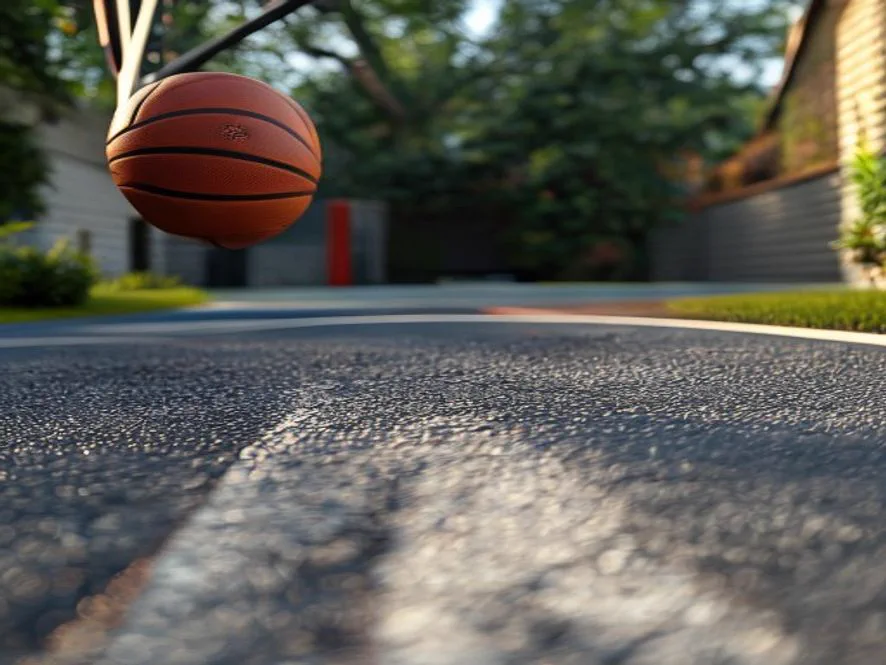
Is asphalt a good surface for basketball?
Asphalt is one of the most common outdoor court surfaces in the world. Most public parks and school playgrounds use it because it is durable, low cost, and gives consistent ball bounce when the surface is fresh and sealed. For a home driveway, the same logic applies. You get a hard, flat play area without the price of a dedicated concrete pad or modular sport tiles.
The trade-offs are real but manageable. Asphalt softens in extreme summer heat, so a portable hoop base can dent it on a 95 degree afternoon. The surface also oxidizes and gets rougher over time, which is harder on the ball and on knees during a fall. Sealcoating every two to four years fixes the roughness and protects against cracks. If you compare it to concrete, asphalt is cheaper to install and easier to patch, but concrete stays harder in heat and lasts longer between repairs. Our asphalt versus concrete guide breaks down the full cost and lifespan picture.
How thick should the asphalt be?
Thickness depends on whether the pad only sees players or also parks vehicles. Foot traffic and a hoop weigh almost nothing compared to a car, so a court-only pad does not need a heavy build. A driveway that doubles as parking does.
- Court only, foot traffic: Three inches of compacted asphalt over four to six inches of compacted gravel base.
- Driveway plus court: Three to four inches of asphalt over six to eight inches of base for cars and light trucks.
- Heavy vehicles or RVs: Four inches or more. See our thickness guide for heavy vehicles.
The base matters as much as the asphalt. A weak or poorly compacted base is the number one cause of cracks and low spots that ruin ball bounce. The National Asphalt Pavement Association stresses proper compaction and drainage as the foundation of any durable pavement. Read our base prep guide before you commit to a contractor.
Slope and drainage for a playable court
You want the surface flat enough that the ball does not roll away on its own, but sloped enough that water drains off. The sweet spot is a slope of about 1 to 2 percent, or roughly one quarter inch of fall per foot. That is gentle enough to play on and steep enough to shed rain. Anything flatter pools water and grows moss, which gets slick. Anything steeper makes the ball roll toward the low side and throws off your shooting.
If your driveway already sits on a hill, plan the hoop at the high end so missed shots roll back toward you instead of into the street. Standing water is a common complaint, so review our drainage solutions and slope and grade guide if your current surface holds puddles.
How much space do you need?
You do not need a regulation court to have fun. Most homeowners just want room to shoot, dribble, and play one on one. Here is what different setups require.
- Single hoop, casual: About 20 by 25 feet gives space to shoot and chase rebounds.
- Key area (most popular): Roughly 20 by 30 feet, which fits many wider driveways.
- Half court: About 42 by 50 feet for real three on three.
- Full court: Around 50 by 94 feet, which is bigger than most residential lots allow.
Before you expand the driveway to fit a court, check setbacks and any neighborhood rules. Many lots have property line setbacks, and an HOA may restrict visible hoops or court paint. Our setback guide covers the spacing rules most towns use.
Court asphalt estimator
Enter your play area and asphalt thickness to estimate square footage and rough material tonnage. This is a planning estimate, not a quote.
Setting up the hoop without wrecking the surface
You have three mounting options, each with a different impact on the asphalt.
- Portable hoop with weighted base: Easiest and renter friendly, but the base sits on a small footprint and can dent hot, soft asphalt. Put a rubber mat or plywood sheet under it and never drag it.
- In-ground pole: Most stable. You core through the asphalt and set the pole in a concrete footing below the frost line. This gives the best play and no dents, but it is permanent.
- Wall or garage mount: No base on the pavement at all, which fully protects the surface, but the play area is fixed by where the garage faces.
If you go in ground, dig the footing before paving when possible so the pole and the surface set together cleanly. On a brand new driveway, keep heavy hoop bases off the surface during the first summer while the asphalt finishes curing. Our first year care guide explains why fresh asphalt stays soft for months.
Painting lines and finishing the court
Paint goes on last, after the surface is clean, cured, and sealed. Wait at least 30 days after new paving, then sealcoat for a uniform black base and proper paint adhesion. Use acrylic court paint or quality outdoor latex, mask your lines with painter's tape, and apply two thin coats rather than one thick one. A key, free throw line, and three point arc are the most common markings for a home setup.
Expect the paint to fade over a few seasons of sun and play, so plan a refresh every two to four years, often at the same time you reseal. Sealcoating is the single biggest thing you can do to extend the life of a court surface. See whether sealcoating is worth it and how often to reseal. For court paint and surface guidance, the CDC notes that smooth, well maintained play surfaces reduce trip and fall injuries.
What it costs to build a court driveway
A basic court only pad of 600 to 800 square feet runs roughly 3 to 6 dollars per square foot installed, so a 600 square foot pad lands near 1,800 to 3,600 dollars before the hoop. Extending an existing driveway costs more per foot because of edge work and tie ins. Add 100 to 400 dollars for a quality hoop, plus paint and sealcoat materials.
Use our driveway cost calculator to model your exact dimensions, and run the numbers on a driveway extension if you are adding to what you have. Get at least three written bids and check them against typical pricing. The Better Business Bureau recommends verifying licensing and reviews before you sign with any paving contractor.
Bottom line
An asphalt driveway is a smart, affordable base for a home basketball court. Build it at least three inches thick over a solid compacted base, keep the slope near 1 to 2 percent so it drains but plays flat, protect the surface from hot portable hoop bases, and sealcoat on schedule. Do that and you get years of clean dribbling without paying for a dedicated sport slab. Plan your dimensions and material with the calculators below before you call a contractor.