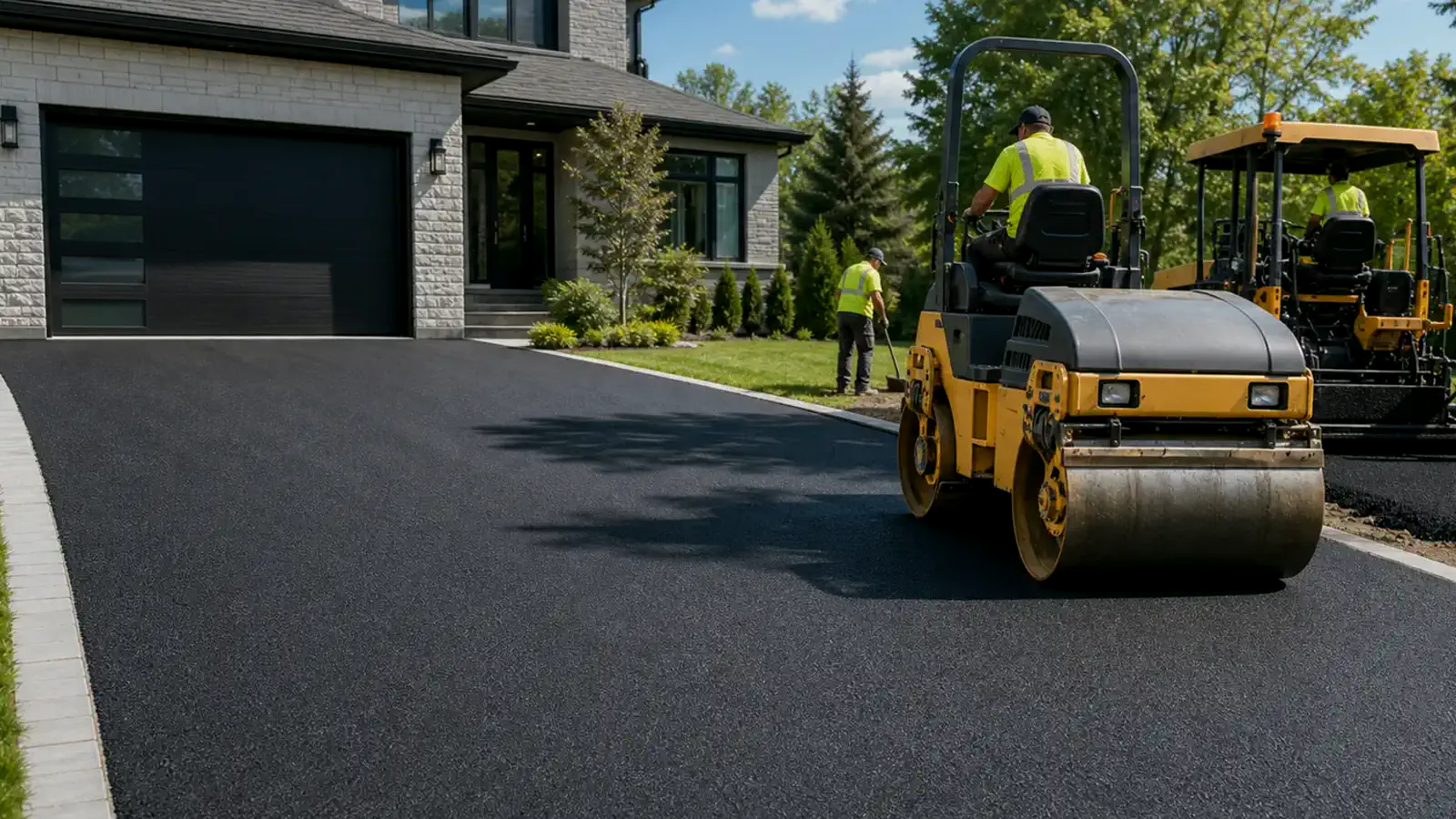
Ask for compacted thickness
The finished depth after rolling is the number that matters. Loose asphalt gets thinner during compaction.
SEO calculator hub
Each tool now has its own page, calculator, FAQ, formula, and assumptions so users land on the exact answer they searched for.
Core tool
Enter the paved area, compacted thickness, material type, waste allowance, and local prices. Results update instantly.
Decision tool
Use this before signing. The goal is not to replace contractor judgment, but to catch missing scope, thin specs, and suspicious pricing.
Specialty calculators
Recycled millings, driveway sealer, and asphalt versus concrete each have their own dedicated calculator with its own formula, FAQ, and assumptions. Open the one that matches your project.
Homeowner guides
The decisions that matter most happen before the contractor shows up. Start with the guides homeowners ask about most.
How to use the numbers
A weak estimate stops at length x width. A realistic one separates the paved area, compacted thickness, density, waste, truck access, base condition, drainage, removal, and local price per ton.
For homeowners, the biggest risk is usually not the arithmetic. It is a quote that does not say whether the thickness is finished after compaction, how much base is included, whether bad material is removed, or how the edges and drainage will be handled.
The finished depth after rolling is the number that matters. Loose asphalt gets thinner during compaction.
Soft soil, poor drainage, and thin aggregate base can ruin a driveway even when the asphalt tonnage looks right.
Sealcoat can protect and darken the surface, but cracks, soft spots, and potholes need repair before sealing.
Frequently asked questions
Multiply area in square feet by compacted thickness in feet, multiply by asphalt density in pounds per cubic foot, then divide by 2,000. For hot mix asphalt, 145 lb/ft3 is a common planning value. Add 5% to 10% waste for most driveway jobs.
For ordinary passenger vehicles, many residential driveways are estimated around 2.5 to 3 inches of compacted asphalt over a prepared aggregate base. Heavier vehicles, poor subgrade, or freeze-thaw exposure may require more. Confirm final specs with a local paving contractor or engineer.
Material is only one part of the job. Real quotes include excavation, grading, base stone, hauling, equipment, crew time, disposal, mobilization, insurance, overhead, and profit.
Yes, but use the millings calculator or select a millings material density. Recycled asphalt millings are usually lighter than dense hot mix asphalt, especially before compaction.
No. Sealer covers the surface. Cracks should be cleaned and filled with the right crack filler before sealcoating. Soft spots or alligator cracking may need cut-out repair rather than sealer.