Short answer: The right asphalt thickness for heavy vehicles is about 3 inches of compacted asphalt. Put that over 6 to 8 inches of packed base. Under it all, you want a firm, well drained subgrade. A standard car driveway often gets less. Think 2 inches of asphalt over 4 inches of base. That thin build ruts under heavy trucks and EVs. Add depth to the surface and the base. Then pack each layer well.
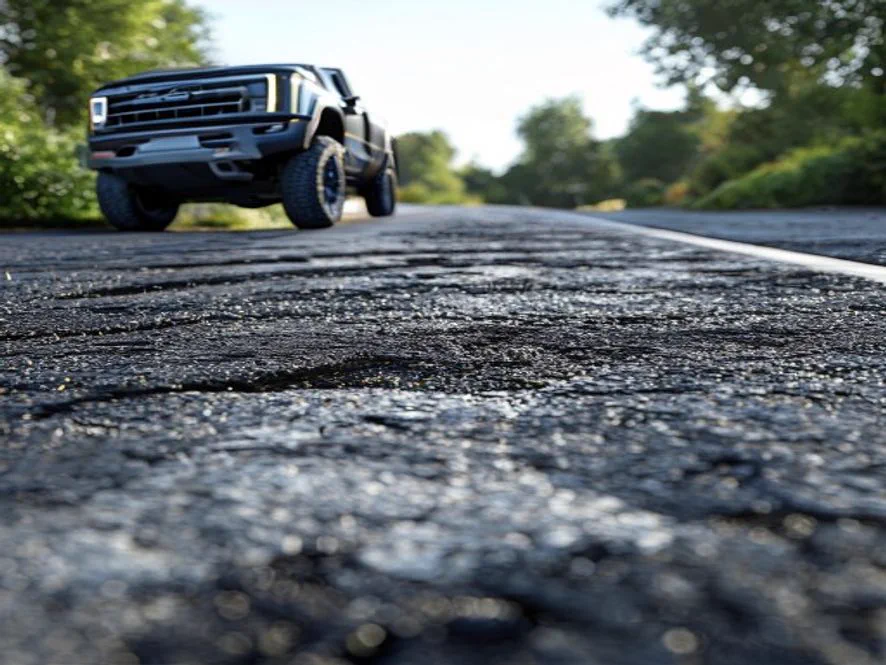
Standard spec versus heavy spec
Not all drives are built the same. A light duty drive is sized for cars and a small SUV. A heavy duty drive is sized for trucks, RVs, and big EVs.
Here's the simple split. A standard build uses about 2 inches of asphalt. It sits on about 4 inches of base. A heavy build uses about 3 inches of asphalt. It sits on 6 to 8 inches of base. The extra inch on top matters. So does the deeper base.
The weight drives the choice. A loaded pickup or a full size electric truck can top 9,000 pounds. Park that on a thin pad daily and it presses in. Our driveway thickness guide covers the full range.
Builders pick the light spec to save money. On a new home, the drive is one of the last items. The cheapest legal build often wins. That's fine for a small car. It's not fine if you park a truck. So don't assume your driveway is heavy duty. Most aren't. Do you drive a heavy vehicle? Ask for the heavy spec up front. The extra cost is small.
The right asphalt thickness for heavy vehicles
For trucks and heavy EVs, aim for 3 inches of compacted asphalt. Some pros place it in two lifts. That means a base course and a top course. Two lifts pack better than one thick layer.
The base matters just as much. Use 6 to 8 inches of crushed stone, packed in lifts. The base spreads the load down into the soil. A thick base on weak soil still beats a thin base on good soil.
Then pack it all down hard. Loose stone or loose asphalt will settle. Each layer needs a roller or a plate compactor. Tight packing turns the right numbers into a drive that lasts.
EVs add a wrinkle here. They're heavier than the gas cars they replace. A battery pack is dense and heavy. A full size electric truck can weigh a third more than a gas one. That weight sits on your drive each night. The heavy spec gives you room to spare. Build for the heaviest vehicle you expect. Not the one you drive today.
Why thin driveways rut under trucks
Rutting is the dip you see in the wheel path. It happens when the load is too much for the build. The asphalt and base squish down and stay down.
A thin builder grade pad is the usual cause. Builders often pour the cheapest legal spec. That works for a sedan. It fails under a daily heavy truck.
Heat makes it worse. Warm asphalt is softer, so summer ruts form fast. If you see dips now, a thin overlay won't save it. The real fix is a rebuild with more thickness. A heavy electric truck adds even more stress. We cover that in will a heavy electric truck damage your driveway.
Watch where you park too. Truck parking in the same spot each day digs the rut faster. So does turning the wheels while stopped. That grind tears at the surface. If you can, vary your parking line a little. Spread the wear. But the real cure is thickness. A pad built to the heavy spec holds up. Daily truck weight won't leave a dip.
The subgrade and base do the real work
People focus on the black top. The hidden layers carry the load. A weak base will fail no matter how thick the asphalt is.
Start with the subgrade, the native soil. It must be firm, graded, and well drained. Soft or wet soil needs to be dug out and replaced. Good base prep is the best thing you can do for a lasting drive.
Then build the stone base in layers. Pack each lift before the next. Slope it so water drains away. Water under the base is the top cause of early failure.
Drainage is part of the build, not a bonus. The surface should slope to shed rain. The base should sit above any standing water. A French drain or a swale helps on a wet lot. Wet base turns to mush under load. That's when even a thick pad ruts. Keep water moving and the strong build stays strong.
Quick heavy duty spec
Here's the build at a glance. Use it as a checklist when you talk to a contractor.
- Asphalt: about 3 inches compacted, best laid in two lifts.
- Base: 6 to 8 inches of packed crushed stone.
- Subgrade: firm, graded, and well drained.
- Compaction: roll or plate each layer.
- Drainage: slope to shed water off the surface.
Want trade level detail? The Asphalt Institute and the National Asphalt Pavement Association both publish design notes. Hand these specs to your contractor. Ask for a match or better.
Get the spec in writing on the quote. A good contractor will list the asphalt depth and the base depth. If a bid only says new driveway, ask for the numbers. Then you can compare bids fairly. A cheap bid often hides a thin build. Knowing the layers lets you spot that. The cheapest quote is often a bad deal on a heavy use drive.
When to go even heavier
Some loads need more than the standard heavy spec. Think dump trucks, RVs, or a fleet of work trucks parked daily.
For those, push the base toward 8 to 10 inches. You can also add a thicker asphalt section at the turn and park zones. Turning wheels grind harder than rolling ones.
An RV is a special case. It sits in one place for weeks, so the point load is high. Our RV parking pad guide shows how to build that spot. Done right, it never sinks. When in doubt, build a bit heavier. The extra cost is small next to a rebuild.
Do the math on cost versus risk. The heavy spec might add a few hundred dollars to the job. A full rebuild later costs thousands. You also lose the use of the drive during the redo. Paying a bit more once is the smart play. Build it right the first time. Then park your truck or EV on it for years with no worry.
Signs your driveway is too thin
Not sure what you have? A few signs point to a thin build. Watch for them, since early action saves the drive.
The clearest sign is rutting in the wheel path. Two soft dips where the tires sit mean the pad is failing. Cracks that spread fast are one more clue. So are soft spots that give under a heavy step on a hot day. Watch the edges too. If they crumble under a truck tire, the build is thin or weak.
If you see these, get a pro to check the depth. They can core a small plug and measure the layers. Then you know the real fix. Maybe a thin overlay will do. Maybe you need a full rebuild. For heavy trucks, a rebuild to the heavy spec is the fix that lasts.