Most driveway paving scams follow the same script. Knock on the door. Pitch leftover asphalt. Drop a too-good price. Pressure for a same-day deposit. Disappear with a thin coat of bad mix in your driveway. The pattern is so common the FTC home improvement consumer page calls it out by name. Below are the ten cues that put any paving contractor in the walk-away pile. Run any quote you have through the asphalt quote checker for a second opinion.
1. Door-to-door cold pitch
A van pulls up. A friendly worker says they are paving down the street and noticed your driveway. They have "extra asphalt" and can give you a great deal if you say yes right now. Walk away. Real residential paving crews are booked weeks out. They do not have spare paver days. They do not knock on doors. The cold pitch is the opening move on almost every paving scam tracked by the Better Business Bureau.
What to do instead: Get quotes from contractors you find by referral, online search, or BBB listing. Set the calendar.
2. The "leftover hot mix" pitch
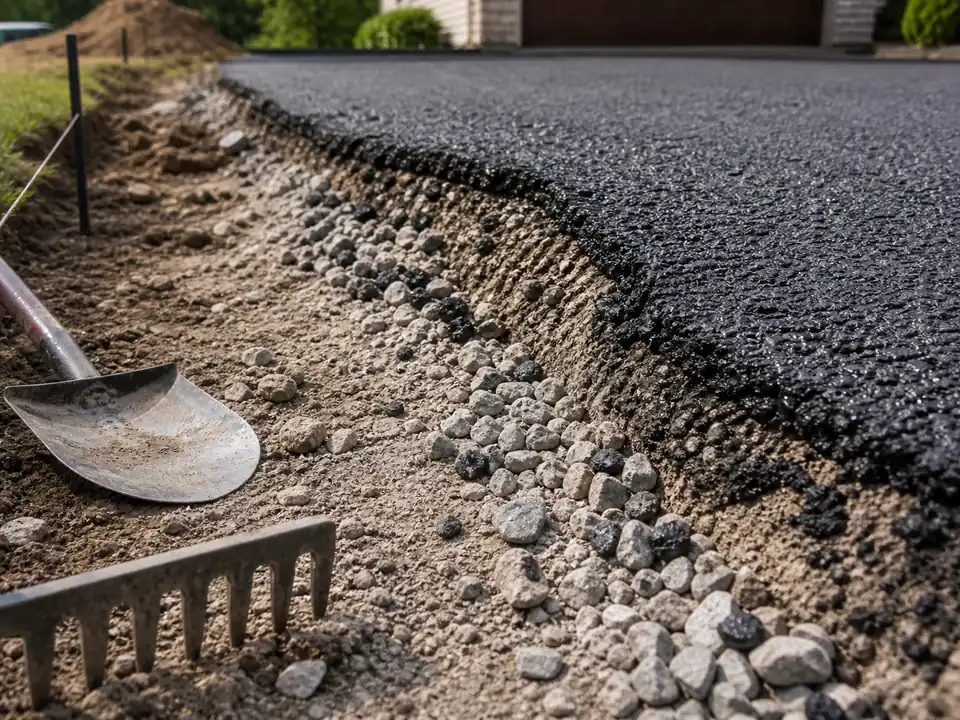
This is the door-to-door cold pitch's signature line. The reality is that real paving jobs order asphalt by the ton to a written spec. There is no significant leftover. Hot mix also hardens fast in a truck. By the time it would be applied to your driveway, it is below the temperature for proper compaction. The result is a soft, under-compacted surface that cracks within months.
The pitch also relies on the homeowner not knowing the math. A 600 sq ft driveway needs about 7 tons of hot mix. No "spare" half-ton on another job is going to pave anything meaningful, much less a real driveway. The story is always a fiction.
What to do instead: Trust no one offering "extra" or "leftover" asphalt. The phrase itself is the scam.
3. Cash-only or wire-only payment
Cash means no paper trail, no card dispute, no IRS reporting, and almost certainly no license or insurance. The savings the contractor passes on come from skipping those costs. When the surface fails in year two, there is no business to call back. A real contractor accepts checks or cards even if a small cash discount is offered for the deposit.
What to do instead: Pay by check or credit card with a milestone schedule. Never pay 100 percent up front.
4. No written quote
A handshake number on the curb is not a quote. A real bid is itemized. Square footage. Compacted thickness. Base depth. Materials spec. Drainage scope. Permit responsibility. Tear-out scope. Cleanup. Warranty. Total. Anything less leaves both sides guessing and gives the contractor cover to drop scope on install day.
What to do instead: Insist on the line items above before paying any deposit. The hidden costs guide shows what each line should include.
5. No license, no insurance proof
Ask for a copy of the state or local contractor license, the general liability insurance certificate, and the workers compensation policy. A real contractor sends all three by email the same day. If the contractor stalls, deflects, or says they "are not required" to carry them, you have your answer. The how to choose framework walks the verification process.
What to do instead: Get the certificate of insurance with your address as certificate holder. Verify the license on the state board's website.
6. Lowball bid 30 to 50 percent under market
A 2,000 dollar quote on a job everyone else priced at 6,000 is not a deal. It is a warning. The savings come from somewhere. Common cuts: no real base prep, thin asphalt below 2 inches compacted, no tear-out, no permits, no insurance, no warranty. The per-square-foot pricing guide shows the 2026 range of 5 to 10 dollars per sq ft installed. A quote below 5 is dropping scope.
The trap is that the lowball quote feels like a win for the first month. The driveway looks fine. The bill is half what the neighbors paid. Then year two arrives. Edges crumble. The surface cracks in a grid pattern. Water pools where the base settled. The "cheap" job becomes the expensive tear-out and re-pour.
What to do instead: Convert each quote to dollars per sq ft. Compare the line items, not just the totals. The cost by size table shows what a clean number looks like at five common sizes.
7. Pressure to sign today
"This price is only good if you sign now." A real bid is valid for 7 to 30 days. Asphalt plant pricing moves slowly. Crew schedules book weeks out. The only person in a hurry is the contractor who knows you will say no if you sleep on it. The pressure tactic is so reliable a marker of trouble that the FTC made it part of the cooling-off rule for at-home sales.
What to do instead: Tell them you need 3 days. A real contractor agrees. A scam artist leaves.
8. No fixed business address
The business card lists a cell phone and nothing else. The truck has no logo. The website is one page. Google Maps shows no shop or yard. A real contractor has a place where the paver lives between jobs. That place has an address. Ask for it. Drive past it. If there is none, the operation can fold and reopen under a new name overnight.
What to do instead: Confirm the physical address before signing. A real shop is not a PO box and not a residential street.
9. Vague materials spec
"We use the best mix" is not a spec. A real quote names the compacted asphalt thickness in inches, the base aggregate type, the base depth, and either references a state DOT mix spec or names the hot mix supplier. Without the spec, the contractor can roll out an inch and a half of low-grade material and call it done. The National Asphalt Pavement Association publishes mix and thickness references you can cite.
What to do instead: Require the thickness and base spec in writing. For heavy vehicle pads, also check the thickness guide.
10. Bad or missing Better Business Bureau profile
Search the contractor on the BBB. A clean profile shows the business name, address, years in business, accreditation, and rating. Unresolved complaints are a tell. So is a profile that was created last month under a new name. So is no profile at all. The bad install signs guide shows what skipped scope and unresolved warranty work look like on the surface in year one.
What to do instead: A BBB-accredited contractor with at least a B rating and no unresolved complaints in the last 12 months. Cross-check on Google Reviews and the state contractor board.
Two quick reality checks any homeowner can run
- Google the phone number on the quote. If it shows up on consumer complaint forums, you have your answer.
- Ask "what plant supplies your hot mix?" A real contractor names a regional plant within 30 miles. A scam pretends not to know.
- Reverse-image search the contractor's portfolio photos. Scam crews lift stock images of fresh asphalt. A real local crew has originals with recognizable backgrounds in your area.
- Check the truck. A real paving truck has a legible company name, a state DOT number, and matches the business address on the quote. An unmarked white truck with a phone number taped to the side does not.
What if you already paid a deposit and now you are worried
Stop further payment. Email the contractor in writing to ask for the license number, insurance certificate, and physical address. If they refuse or stall more than 48 hours, send a written notice canceling under your state's home solicitation cancellation rule (most allow 3 business days). File a complaint with the BBB and your state contractor board. If the deposit was paid by credit card, file a chargeback. If paid by check, contact your bank about a stop payment.
Bottom line
One red flag is enough to keep walking. Two is a scam. The good paving contractors are easy to find. They have a yard, a website, a license number, insurance certificates, references from 3-year-old work, and a 7-day quote validity. Use the framework guide to find them and the 12 questions to ask to vet them. The best time to pave guide can also save you 10 to 15 percent without any scam-style "leftover asphalt" pitch.
Consumer complaint, license-board, and BBB references are on the sources page.