On asphalt paving day, expect the crew to arrive early, spend the morning on prep and base work, then lay and roll the hot mix over the afternoon. A typical driveway is finished in one day, about 6 to 10 hours. Plan your day around our paving day prep checklist and the full install timeline.
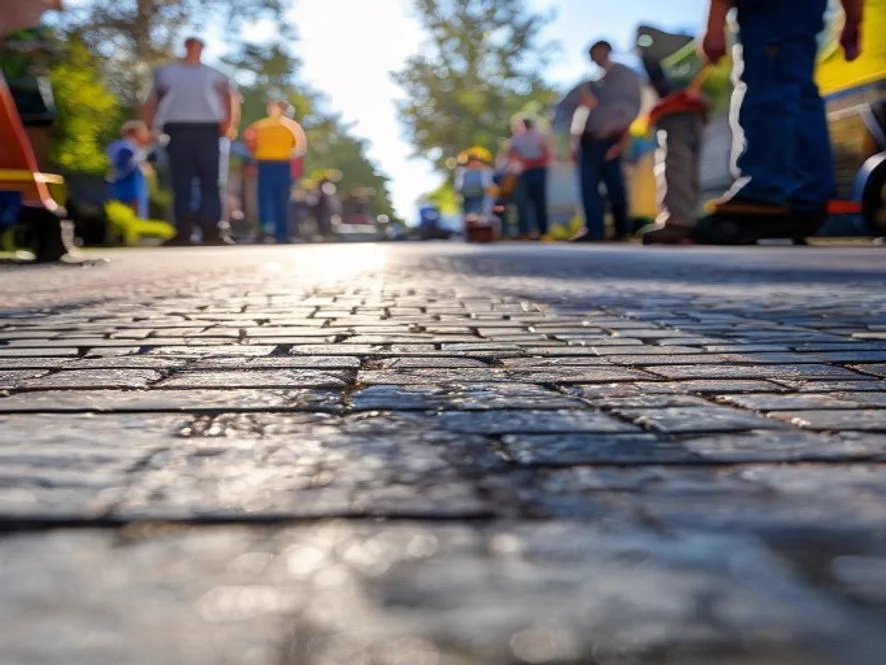
The night before and early morning
Paving day starts before the trucks show up. The evening before, move every vehicle off the driveway and onto the street or a neighbor's drive, because you will not be able to use yours for two to three days after. Clear away basketball hoops, planters, trash cans, garden hoses, and anything within a few feet of the edges. Unlock side gates so the crew can reach the work area, and plan to keep kids and pets indoors all day.
If you are still finalizing details, our before paving day prep checklist walks through every item to handle in advance. Confirm the start time the day before, since asphalt crews often run early to beat afternoon heat and to keep the hot mix at temperature on the drive from the plant.
Hour 0 to 1: crew arrival and the walkthrough
Most crews arrive between 7 and 8 a.m. with a paver, a roller, a skid steer or small loader, dump trucks, and a hand crew. The foreman should walk the job with you first. This is your one chance to confirm the layout, the edges, the drainage slope, and the tie-in to your garage and the street apron. Point out where you want water to run, since a driveway should shed water away from the house and toward the street. Our slope and grade guide explains the percentages a good crew aims for.
Be present and engaged for this hour even if you leave later. Once asphalt is down, changes are expensive or impossible. Confirm the thickness you are paying for matches the written contract. If you are unsure what is reasonable, our residential thickness guide and the layers explained guide cover the numbers.
Hour 1 to 4: prep, grading, and base work
This is the longest and most important stretch, and it is mostly dirt and gravel, not asphalt. On a new build, the crew excavates, shapes the subgrade, and lays and compacts a crushed stone base, usually 4 to 8 inches deep. On a resurface or overlay, they clean the old surface, fix soft spots, and may mill the edges so the new layer ties in flush. Good base work is what makes a driveway last 15 to 25 years, so do not rush this part. Our base prep guide shows what proper compaction looks like.
- Excavation: the old surface or topsoil is dug out to make room for the base and asphalt.
- Grading: the crew shapes the slope so water drains, typically a 1 to 2 percent fall toward the street.
- Base compaction: crushed stone is spread and rolled in lifts until it stops moving under the roller.
- Edge and drainage prep: any drains, swales, or channel work go in now, before the asphalt seals the surface.
If your lot has drainage issues, this is the moment to address them. See our drainage solutions. The U.S. Federal Highway Administration explains why a strong, well-drained base matters more than the asphalt thickness itself at fhwa.dot.gov.
Hour 4 to 7: laying and rolling the asphalt
Once the base is solid, the dump truck backs up to the paver and feeds it hot mix at around 275 to 300 degrees Fahrenheit. The paver spreads the asphalt in a smooth mat, and the hand crew rakes the edges, corners, and the tie-in by the garage. Right behind the paver, a roller makes pass after pass to compact the mat while it is still hot. This window is short because asphalt must be compacted before it cools below about 175 to 185 degrees.
Expect strong fumes and a lot of heat during this hour. The smell is normal and fades within a day or two as the surface cures. If anyone in the household is sensitive to fumes, stay indoors with windows closed on the work side. The CDC offers general guidance on asphalt fume exposure at cdc.gov, and our own asphalt fumes guide covers what is and is not a concern for homeowners.
Watch for clean, straight edges and a tight, even surface with no obvious dips or open seams. A birdbath or low spot caught now is easy to fix. One you discover after the crew leaves is your problem. Our notes on bad install problems show what to look out for in real time.
Planner
Paving day timeline estimator
Enter your driveway size and job type to see a rough hour-by-hour timeline for your paving day.
Hour 7 to 8: cleanup and final walkthrough
After the last roller pass, the crew loads equipment, sweeps stray material off the street, and removes any forms or stakes. Before they pull away, do a final walkthrough with the foreman. Check the edges, the slope, the garage tie-in, and the apron at the street. Confirm how long to stay off the surface and ask when you can park. This is also when you confirm the job matches the contract and settle any final payment terms. Keep your paving contract checklist handy so nothing slips.
- Surface check: look for smooth, even asphalt with tight edges and no obvious low spots or open seams.
- Drainage check: pour a bucket of water near the high point and watch it run to the street, not the house.
- Cure timeline: get the exact stay-off and parking windows in writing or by text.
- Warranty: confirm what is covered and for how long. Our warranty guide explains the fine print.
What can change the schedule
Not every paving day runs from breakfast to dinner. Several factors stretch or shrink the timeline.
- Driveway size and shape: a long rural driveway or a steep, curved layout takes far longer than a short straight pad.
- Job type: a fresh new build with full excavation runs longer than a simple overlay on a sound surface.
- Weather: crews avoid paving on a wet base or in steady rain, and cold mornings delay the start.
- Plant distance: the asphalt plant must be close enough to deliver hot mix at temperature, so long hauls add waiting time.
- Access: tight gates, fences, and overhead wires slow the equipment down.
The best paving weather is dry, mild, and above 50 degrees Fahrenheit. Our best time to pave guide covers the ideal season and temperature window. The National Asphalt Pavement Association at asphaltpavement.org publishes the compaction and temperature standards a good crew follows.
After the crew leaves: the first 72 hours
Your driveway looks done, but it is not ready for traffic. Fresh asphalt is soft and needs time to harden. Stay off it entirely for the first 24 to 72 hours for foot and light vehicle traffic, and longer in hot weather when the surface stays pliable. Full curing takes 30 days or more. During the first month, do not park in the same spot every time, avoid turning your wheels while stopped, and keep heavy trucks, dumpsters, and trailers off it.
Our curing time guide and the post on when you can park give the exact windows. For the longer view, the first year care guide covers everything from edge support to your first sealcoat, which usually waits 6 to 12 months. To plan the budget side of the whole project, run your numbers through the driveway cost calculator and sanity-check any bid with the quote checker.
Bottom line
A standard asphalt driveway is paved in a single day, with the morning spent on prep and base work and the afternoon on laying and rolling the hot mix. Be home at the start to confirm the layout and slope, stay reachable through the day, and inspect the finished surface before the crew leaves. Then keep off it for two to three days and treat it gently for the first month. Good prep and a careful walkthrough are what turn a one-day job into a driveway that lasts decades.