Kids can usually walk on a new asphalt driveway after 1 to 3 days, once it is cool and firm. Wait 14 to 30 days before they ride bikes, scoot, or skate, because the surface keeps hardening for months. Hot weather and fresh fumes mean you should wait even longer to be safe.
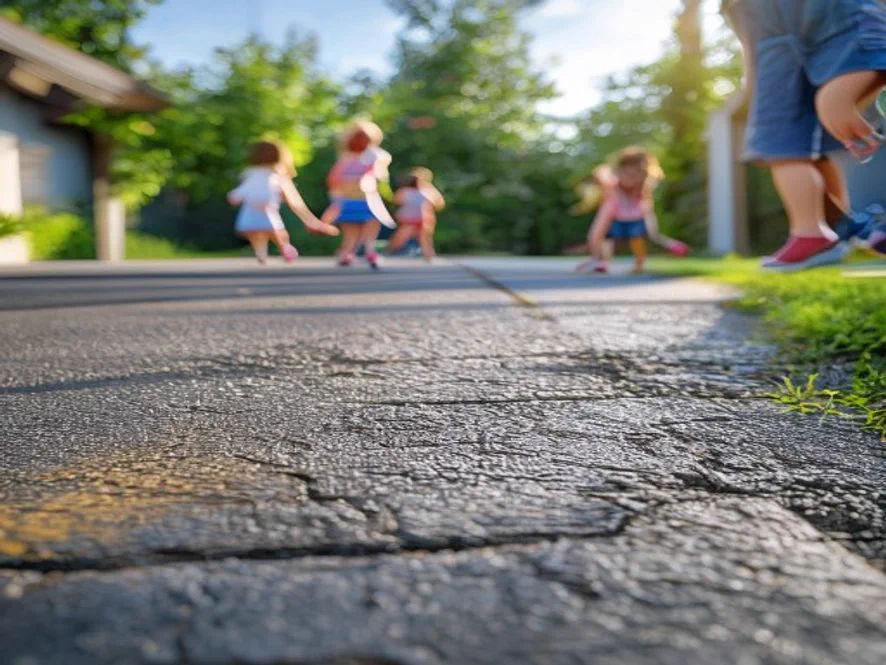
Why new asphalt needs time before kids use it
Asphalt is not like concrete. Concrete cures through a chemical reaction. Asphalt simply cools and slowly stiffens as the oils in the binder oxidize and the mix tightens up. When the paving crew leaves, the driveway feels firm because the top has cooled. Underneath, the mix is still soft and will keep settling and hardening for six to twelve months. That gap between "looks done" and "is done" is exactly why kids can damage a brand new driveway without trying.
The two real concerns for children are heat in the first day or two and softness in the first month. A toddler in bare feet, a bike kickstand, or a heavy ride-on toy can all leave marks that never come out. If you want the full timeline for the whole surface, our asphalt driveway curing time guide walks through every stage from paving day to full hardness.
How long before kids can walk on it?
Plan on 1 to 3 days before kids walk on the new mat, and only after you check three things. First, the surface should be cool to the touch, not warm and not soft. Second, it should not feel tacky or sticky under a shoe. Third, the strong tar smell should be mostly gone. In cool, dry weather you may hit all three by day two. In a heat wave it can take longer.
- Day 0 to 1: Stay off entirely. The surface is hot and the fumes are strongest. This is the same window you should keep cars off, covered in our note on when you can park on a new asphalt driveway.
- Day 1 to 3: Light foot traffic with shoes is usually fine once the surface is cool and firm. No running, dragging, or pivoting that can scuff it.
- Day 3 to 14: Walking is fine. Hold off on bikes, scooters, and heavy toys.
- Day 14 to 30: Most normal play is okay. Treat sharp edges and hot afternoons with care for the rest of the first season.
How long before kids can bike, scoot, or skate?
Wheels and stands concentrate weight into a tiny contact point, and soft asphalt gives way under that pressure. A bike kickstand left down on a warm day can punch a clean hole. A scooter dropped on its side can gouge a line. Wait 14 to 30 days before kids ride on the driveway, and longer if you live somewhere hot. The same caution applies to anything with a stand or a narrow wheel, including strollers loaded with weight and ride-on power toys.
If your driveway doubles as the family sports court, that surface takes even more abuse from pivoting and dragging. Read our piece on building an asphalt driveway basketball court before you let the hoops come out, since the timeline and surface prep are stricter for that kind of use.
Is new asphalt dangerous to breathe around kids?
Fresh hot mix gives off fumes during and just after paving. Those vapors can irritate eyes, nose, and lungs, especially for small children and anyone with asthma. The U.S. CDC and NIOSH track asphalt fume exposure for paving workers, and while a homeowner driveway is a much smaller source, the smart move is simple: keep kids indoors or well back on paving day and the day after. By the time the surface is cool and the smell has faded, the off-gassing that matters is largely done. The EPA classifies cured asphalt pavement as inert for everyday contact, which is why playgrounds and school lots are routinely paved with it.
If the fume question is your main worry, we cover it in depth in are asphalt driveway fumes dangerous, and pet owners should also see is a new asphalt driveway safe for pets.
The heat hazard nobody warns you about
Asphalt is dark, so it soaks up sun and gets brutally hot. On a 90 degree day the surface can climb to 140 to 200 degrees Fahrenheit, hot enough to cause a contact burn on bare skin in seconds. That risk is highest in the first day or two when the mat is also still warm from paving, but it stays true all summer long for any dark driveway. Keep shoes on small children, and keep babies and pets off the surface during peak afternoon heat. For more on summer surface temperatures, see does an asphalt driveway get too hot and protecting dog paws from summer heat. OSHA publishes heat-illness guidance that explains why dark paving radiates so much warmth.
How to protect a new driveway during the wait
- Block it off: Cones or a rope across the apron tell kids and delivery drivers to stay clear for the first few days.
- No standing weight: Keep bikes, trampolines, basketball hoops, and pools off the surface for the first month.
- Watch the edges: The edges are the weakest part of any new driveway and crumble first if kids ride or jump along them. More in fixing crumbling asphalt edges.
- Hose it down on hot days: A quick rinse cools the surface and helps it firm up in the first week.
- Follow the first-year plan: Our first-year care guide covers when to seal, when to drive, and when normal play is fully safe.
Mini-tool
Kid-Safe Timeline Checker
Pick today's weather and what the kids want to do. This estimates how many days to wait before it is reasonably safe.
Bottom line
Give a new asphalt driveway 1 to 3 days before kids walk on it with shoes, and 14 to 30 days before bikes, scooters, skateboards, and games. Watch for heat in the first day or two, keep little ones away from fresh fumes, and protect the edges. The surface keeps hardening for months, so a little patience in the first season saves you from permanent dents and scuffs. When the paving day itself is on your mind, our paving day walkthrough tells you exactly what happens and when the driveway is yours again.